It's about time.
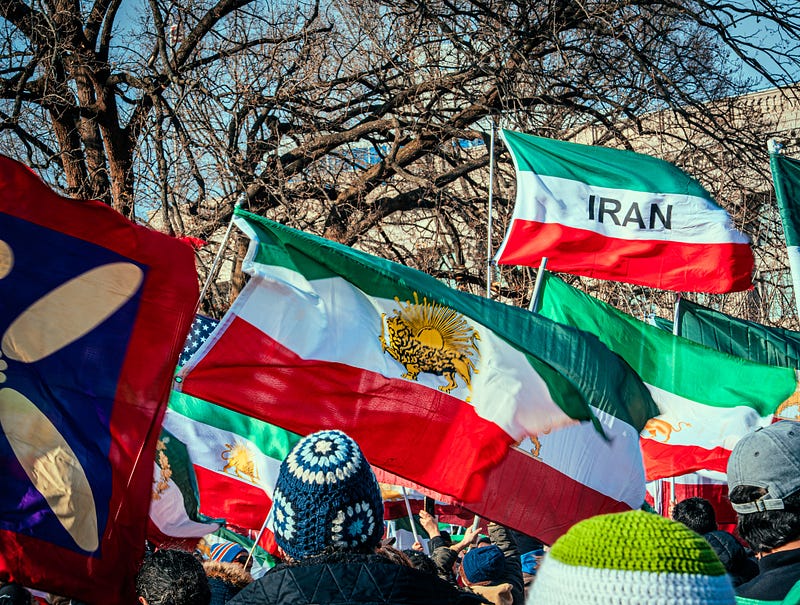
The brutal regime of Iran isn’t having a good year.
Despite ruthlessly quelling the massive protests which took place last month and in December, killing as many as 30,000 Iranians by some estimates, the unrest in Iran continues.
As well it might.
In January, U.S. President Donald Trump threatened action unless Iran’s rulers stopped the indiscriminate murder of thousands of its citizens. The Ayatollah agreed to do so.
But the executions didn’t stop.
Soon, it was reported that the Ayatollah had gone into hiding. It has also been reported that millions of dollars have been leaving Iran — in advance of a ruling regime which may soon have to flee the country entirely.
Unsurprisingly, Iran has initiated new talks with the U.S. to deescalate the conflict.
“Iran, US hold indirect talks to de-escalate Mideast tensions,” Patrick Sykes reported for Bloomberg on Friday.
Tensions certainly have been heating to a boil.
“Trump has threatened Tehran with military strikes if it doesn’t agree to a deal, with Iran warning that any attack would trigger a regional war engulfing Israel and the US,” wrote Sykes. “The US on Friday urged any of its citizens in Iran to leave or stockpile food and water if they’re unable to do so. It’s unclear how many Americans are still in Iran, but the number is probably small.”
During testimony before the Senate Committee on Banking Thursday, U.S. Treasury Secretary Scott Bessent was frank about the situation in Iran.
“We have seen the Iranian leadership wiring money out of the country like crazy,” Sec. Bessent told the committee. “The rats are leaving the ship. That is a good sign that they know the end may be near.”
“At the Treasury, what we have done is created a dollar shortage in the country,” Mr. Bessent explained. “The central bank had to print money. The Iranian currency went into free fall. Inflation exploded, and hence we’ve seen the Iranian people out on the street.”
“I would say the culmination came in December, when one of the largest banks in Iran went under after a bank run,” Bessent added.
“The good news,” Bessent told the assembled Senators, “is that we have seen — and we can see it through Treasury’s FinCEN tracking.”
Sec. Bessent, like many in the Trump administration, has been watching the situation in Iran very carefully since December.
“Today, amidst the Iranian regime’s brutal crackdown on peaceful protestors and its complete shutdown of internet access to conceal its abuses against the Iranian people, the U.S. Department of the Treasury’s Office of Foreign Assets Control is increasing pressure on the regime’s shadow fleet,” the U.S. Treasury department announced on January 23, 2026. “OFAC is targeting nine shadow fleet vessels and their respective owners or management firms that have collectively transported hundreds of millions of dollars’ worth of Iranian oil and petroleum products to foreign markets.”
“The Iranian regime is engaged in a ritual of economic self-immolation — a process that has been accelerated by President Trump’s maximum pressure campaign,” Bessent added on the same day. “Tehran’s decision to support terrorists over its own people has caused Iran’s currency and living conditions to be in free fall.”
“Today’s sanctions target a critical component of how Iran generates the funds used to repress its own people,” he added. “As previously outlined, Treasury will continue to track the tens of millions of dollars that the regime has stolen and is desperately attempting to wire to banks outside of Iran.”
Despite the obvious economic challenges, even as international pressure mounts, Iran’s dictators have still been engaging in a surprising level of saber rattling.
“When you see the leadership moving money out like this,” Bessent assured lawmakers, “it tells you everything you need to know about what they think is coming next.”
“U.S. envoy Steve Witkoff and Iranian Foreign Minister Abbas Araghchi held their planned talks in Oman on Friday, despite some last-minute demands from Iran that threatened to derail the process,” reported John Hayward for Breitbart on February 6, 2026.
As of today, the Iranian regime is facing the most significant crisis since the revolution in 1979. The regime hasn’t crumbled — yet. But it may yet be crumbling.
And 2026 may be the year it finally ends for good.
(Contributing writer, Brooke Bell)